
Most people think of missing teeth as a dental issue. But tooth loss affects more than your smile.
It can change the shape of your face.
At CōR Perio in North Miami, many patients are surprised to learn that facial aging is often connected to jawbone shrinkage after tooth loss.
Here’s what happens — and why early treatment matters.
Your Teeth Support Your Facial Structure
Teeth do more than help you chew. They support:
- Your lips
- Your cheeks
- The height of your lower face
- The natural contour of your jawline
The roots of your teeth stimulate the jawbone. That bone provides structural support for the soft tissues of your face.
When a tooth is lost and not replaced, that support begins to weaken.
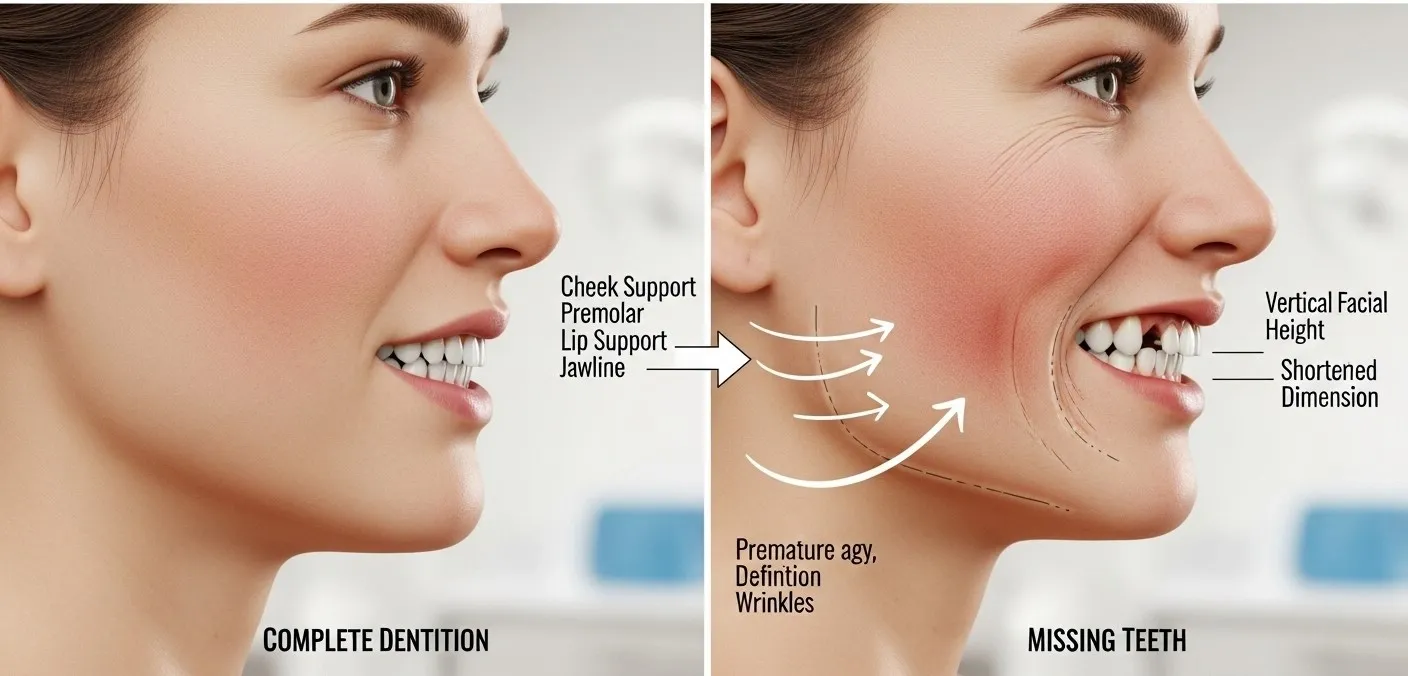
Bone Shrinkage After Tooth Loss
When a tooth is extracted, the jawbone in that area no longer receives stimulation. The body begins a natural process called bone resorption.
Over time:
- The bone ridge narrows
- The height of the jaw decreases
- The foundation beneath the face becomes thinner
This process is gradual and painless — but visible changes can develop over the years.
How Missing Teeth Can Make You Look Older
As jawbone volume decreases, facial proportions shift.
Patients may notice:
- A sunken or collapsed appearance around the mouth
- Thinner or less supported lips
- Deeper smile lines
- Sagging in the lower face
- A shorter-looking chin-to-nose distance This is sometimes called “facial collapse.”
Even losing a single tooth can begin affecting local support.
When multiple teeth are missing, the changes become more pronounced.
The Lower Third of the Face Is Most Affected
The lower third of your face — from the base of your nose to your chin — depends heavily on teeth and bone support.
When teeth are lost:
- The vertical dimension of the face decreases
- The jaw rotates slightly forward
- Wrinkles may appear more prominent
These structural changes are often mistaken for normal aging.
While aging is natural, tooth-related bone loss accelerates the process.
Why Replacing Teeth Preserves Facial Structure
Dental implants are considered the most biologically stable tooth replacement option because they replace both:
- The visible crown
- The root beneath the gum
By integrating with the jawbone, implants:
- Restore bone stimulation
- Preserve ridge width and height
- Maintain facial proportions
- Support soft tissues
Unlike removable appliances, implants help maintain the underlying facial structure.
The Emotional Impact of Structural Changes
Facial changes after tooth loss are not just physical.
Patients often report:
- Feeling older than they are
- Reduced confidence
- Hesitation to smile
- Changes in social interactions
Restoring structure is about more than replacing teeth.
It’s about restoring balance, confidence, and long-term health.
Protecting Your Smile — and Your Profile
Tooth loss not only affects function. It affects facial integrity.
Replacing missing teeth early helps protect:
- Bone density
- Facial contours
- Lip support
- Long-term appearance
If you have experienced tooth loss, consulting a periodontist in North Miami can help you understand how to preserve both your smile and your facial structure.
Frequently Asked Questions
Does everyone experience facial changes after tooth loss?
Bone loss is common after extraction if the tooth is not replaced. The extent varies depending on the number of missing teeth and the time elapsed.
Can one missing tooth change my face?
A single missing tooth may cause localized bone loss, but multiple missing teeth can lead to more visible structural changes.
Do dental implants prevent facial collapse?
Yes. Because implants replace the root, they help preserve bone and maintain facial support.
Is bone grafting necessary for facial support?
In some cases, bone grafting may be recommended to rebuild structure before implant placement.
Is facial aging from tooth loss reversible?
Treatment can restore support and improve facial contours, though early intervention provides the best outcomes.